
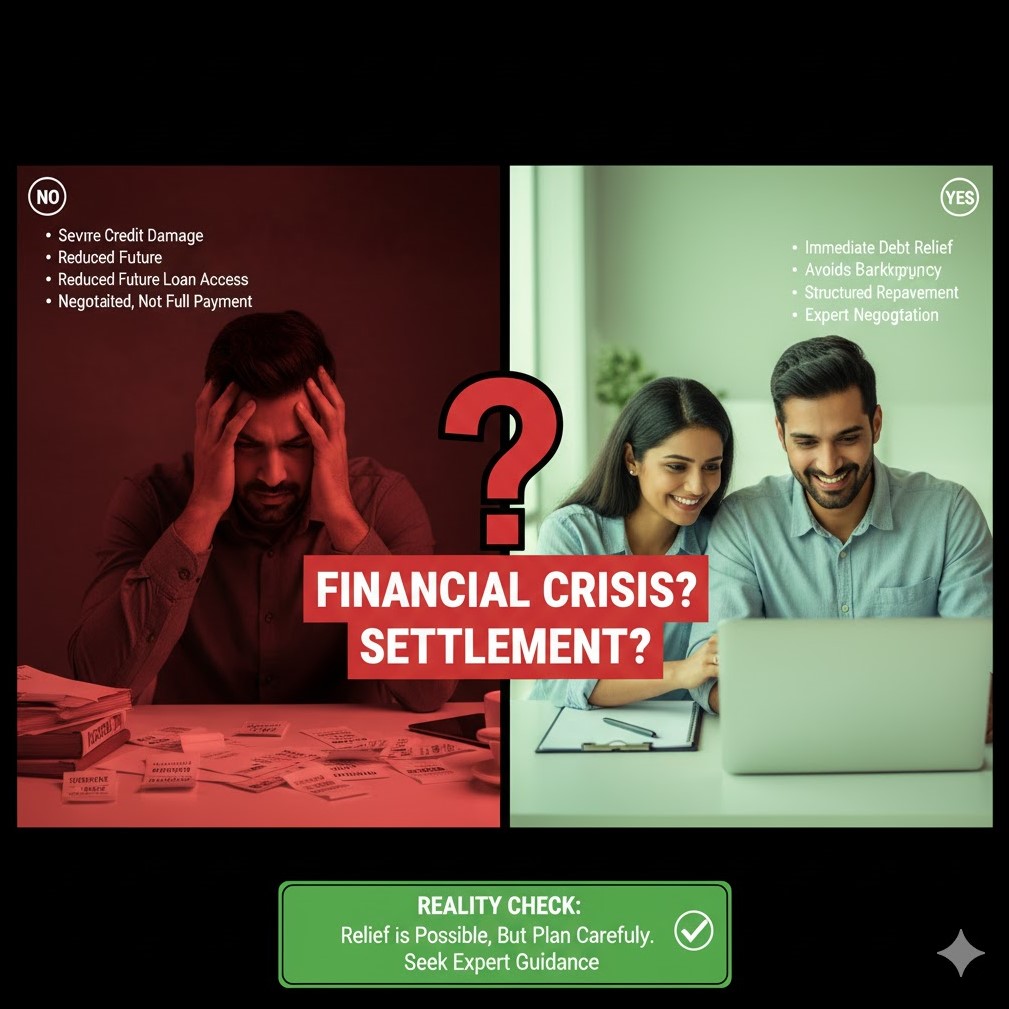
When a financial emergency hits—be it job loss, a medical crisis, or a business setback—you need a safe, definitive way out of overwhelming debt. The pressure to pay full EMIs when your income has vanished is immense, often leading to months of struggle, rising debt, and aggressive Bank Harassment.
In this scenario, Loan Settlement is not just an option; for many facing genuine financial distress, the RBI recognizes it as a necessary path to becoming debt free. But is it safe? The answer is a qualified Yes, but only if you approach it with eyes wide open and professional guidance.
The Safety of Loan Settlement vs. the Risk of Default
In a financial crisis, you are choosing between continuous default (the uncontrolled path) and a calculated settlement (the controlled path).
The Dangers of Continuous Default (The Unsafe Path)
-
Debt Growth: Your loan balance keeps compounding with interest, penalty fees, and legal charges, making the debt impossibly large.
-
Legal Risk: The bank may eventually initiate legal proceedings (like SARFAESI or Civil Suits) and report the account as a ‘Write-Off,’ which is far worse for your credit than a ‘Settlement.’
-
Endless Harassment: Continuous default provides the bank grounds for persistent, aggressive recovery efforts (Bank Harassment), destroying your mental peace.
The Safety Net of Loan Settlement (The Controlled Path)
A well-executed Loan Settlement provides a controlled, safe way to close the debt chapter:
-
1. Immediate Financial Relief (Safety from Growth): The settlement agreement freezes the debt and eliminates future interest/penalties. The lender agrees to waive a significant portion of the outstanding amount (often 20-40% or more), reducing your liability to a manageable lump sum.
-
2. Legal Finality (Safety from Legal Action): Once the settlement is finalized and paid, the bank issues a No Dues Certificate (NDC). This legally binds the lender from pursuing any further recovery actions, making you debt free from that specific loan.
-
3. Ends Harassment (Safety from Stress): Ending the debt struggle removes crippling financial anxiety and eliminates the bank’s grounds for continued recovery calls and threats, putting a permanent stop to Bank Harassment.
The Important Risks to Acknowledge (The Fine Print of Safety)
While Loan Settlement offers a safe exit from unmanageable debt, it involves necessary trade-offs you must understand:
| Risk Factor | Explanation (As per Indian Guidelines) | Mitigation Strategy |
| Credit Score Impact | The account is marked “Settled” for less than the full amount. This causes an initial drop in your CIBIL score. | This status is temporary, remaining for up to 7 years. It is a necessary price for immediate debt freedom and is always better than an account marked “Written-Off.” |
| Future Credit Access | Lenders will view the “Settled” status as a sign of past distress. | Settlement should be a last resort. Plan to rebuild credit gradually and responsibly after resolution. The ability to eventually get credit back is worth the wait. |
| Tax Implications | The amount of debt waived by the lender may be taxable as “Income from Other Sources,” depending on the original purpose of the loan. | Always consult a Chartered Accountant (CA) or tax expert before finalizing the settlement to understand any potential tax liability on the forgiven amount. |
The Final Verdict: Settlement as a Strategic Reset
Loan Settlement is a safe and strategic option when facing a genuine financial crisis and when your alternative is continuous default and relentless harassment. It is a decisive reset button that takes a temporary hit on your credit health in exchange for permanent debt free status and stability.
The key to making it safe is professional Legal Support. Never settle without a written, legally sound agreement and clear understanding of the consequences.
Facing a Financial Emergency and Bank Harassment?
Do not risk endless default. Contact Us today. We specialize in negotiating secure, legally sound Loan Settlement agreements to put you back on the path to stability.