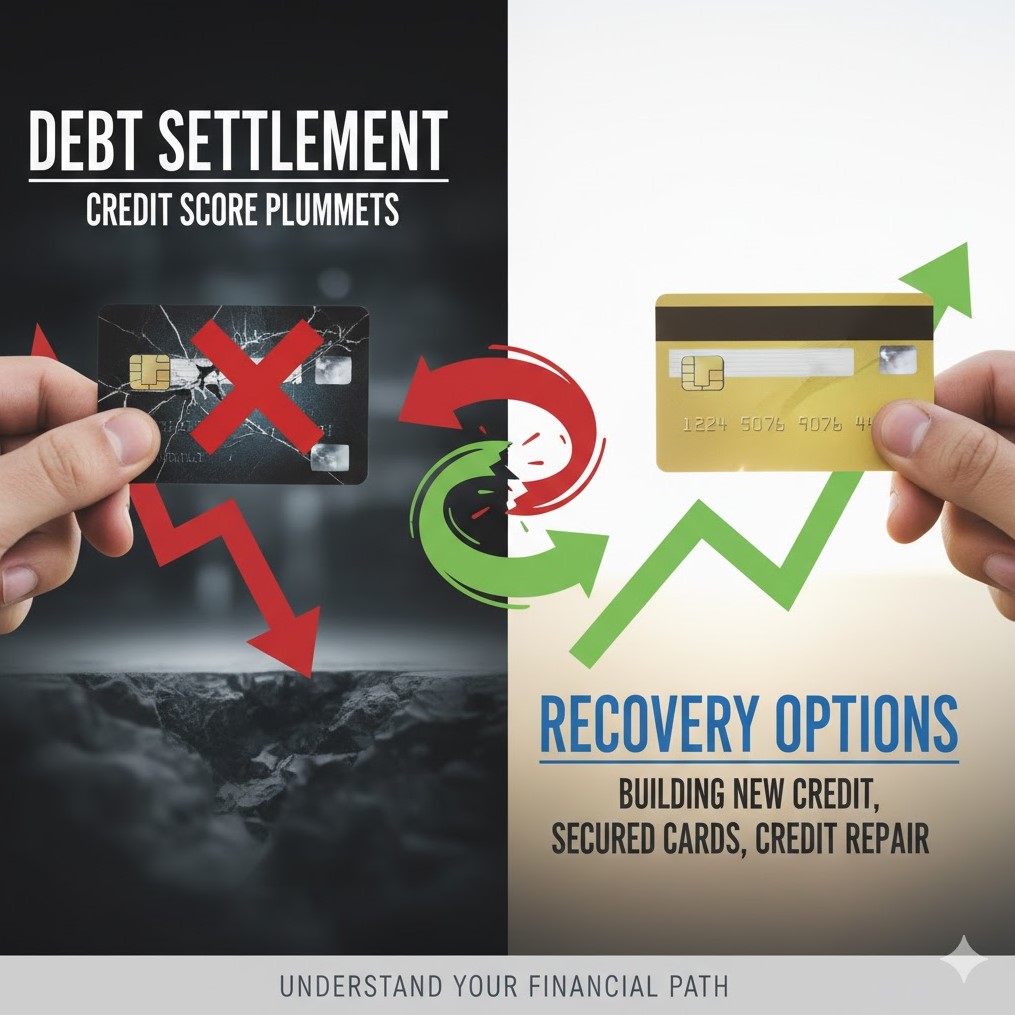
Navigating overwhelming debt is challenging, and exploring debt settlement is a common step toward financial freedom. However, before pursuing this option, it’s crucial to understand how it impacts your credit score and, more importantly, how you can begin your credit score recovery.
At Bank Harassment, we believe in empowering you with clear information to make the best decisions for your financial future.
The Immediate Impact of Debt Settlement on Your Credit Score
Debt settlement is an agreement with a creditor to pay back a portion of the total debt, with the remainder being forgiven. While it offers immediate relief and stops the debt cycle, its effect on your credit profile is significant and generally negative in the short term.
1. The “Settled” Status 📉
When a debt is settled, the creditor reports the account status to credit bureaus as “Settled for Less Than the Full Amount” (or similar wording).
- Lender View: This status signals to future lenders that you did not pay the full contractual obligation. This is viewed much less favorably than an account marked “Paid in Full.”
- Credit Score Drop: The act of settling a debt, combined with the late or missed payments that often precede settlement negotiations, can cause a substantial and immediate drop in your credit score. Payment history is the most significant factor in your score, and missed payments severely impact it.
2. The Seven-Year Mark
The negative mark of a settled account remains on your credit report for up to seven years from the date of the original delinquency. During this period, securing new credit (like a mortgage or car loan) may be more difficult or come with higher interest rates.
3. Why the Damage is Often Pre-Existing
It’s important to remember that for many individuals, the credit score damage starts before the settlement. If you were already missing payments to be eligible for settlement, your score has already taken a hit. Settlement, in this context, is a painful but necessary step to stop the bleeding and prevent more severe outcomes like bankruptcy.
Your Roadmap to Credit Score Recovery
The damage from a settlement is not permanent. With a disciplined approach, you can begin your credit score recovery immediately and see your score improve long before the seven-year mark passes.
1. Rebuild with a Credit Score Builder Mindset 🛠️
Immediately focus on accounts that are still active and in good standing.
- Pay On Time, Every Time: Make all future payments on any remaining debt (credit cards, loans, bills) on time. Consistent, positive payment history is the most effective way to rebuild your score.
- Keep Balances Low: Maintain a very low credit utilization ratio (CUR). Try to keep your credit card balances under 30% of the limit—ideally under 10%. A low CUR shows responsible credit management.
2. Introduce New, Responsible Credit
If you’re finding it difficult to get approved for a traditional credit product, consider these specific tools:
- Secured Credit Card: This type of card is backed by a cash deposit, which acts as your credit limit. Use it for small, necessary purchases and pay the balance in full every month. This creates a positive payment and usage history.
- Credit Builder Loan: Offered by many credit unions, this structured loan helps you build a good payment history by having you make installment payments into a savings account, which you can access once the “loan” is paid off.
3. Monitor and Ensure Accuracy
Regularly check your credit report to ensure the settled account is marked with a $0 balance and the correct “Settled” status. Dispute any inaccuracies immediately, as errors can needlessly drag down your score.
Debt Settlement vs. Bank Harassment
While debt settlement is a financial tool to resolve the debt itself, it is separate from, but often related to, Bank Harassment. If you are being subjected to aggressive or illegal debt collection practices while exploring or undergoing settlement:
- You have rights under the law. Collectors cannot harass you, use abusive language, or call you incessantly.
- A settlement does not give them the right to break the law. Even with a past-due debt, illegal collection practices are never acceptable.
If you are experiencing aggressive or abusive collection attempts, our team can provide guidance on your rights and how to stop illegal Bank Harassment.
Ready to take control of your debt situation and protect your rights? Contact Us today for a confidential discussion on your options for debt resolution and dealing with collection issues.