
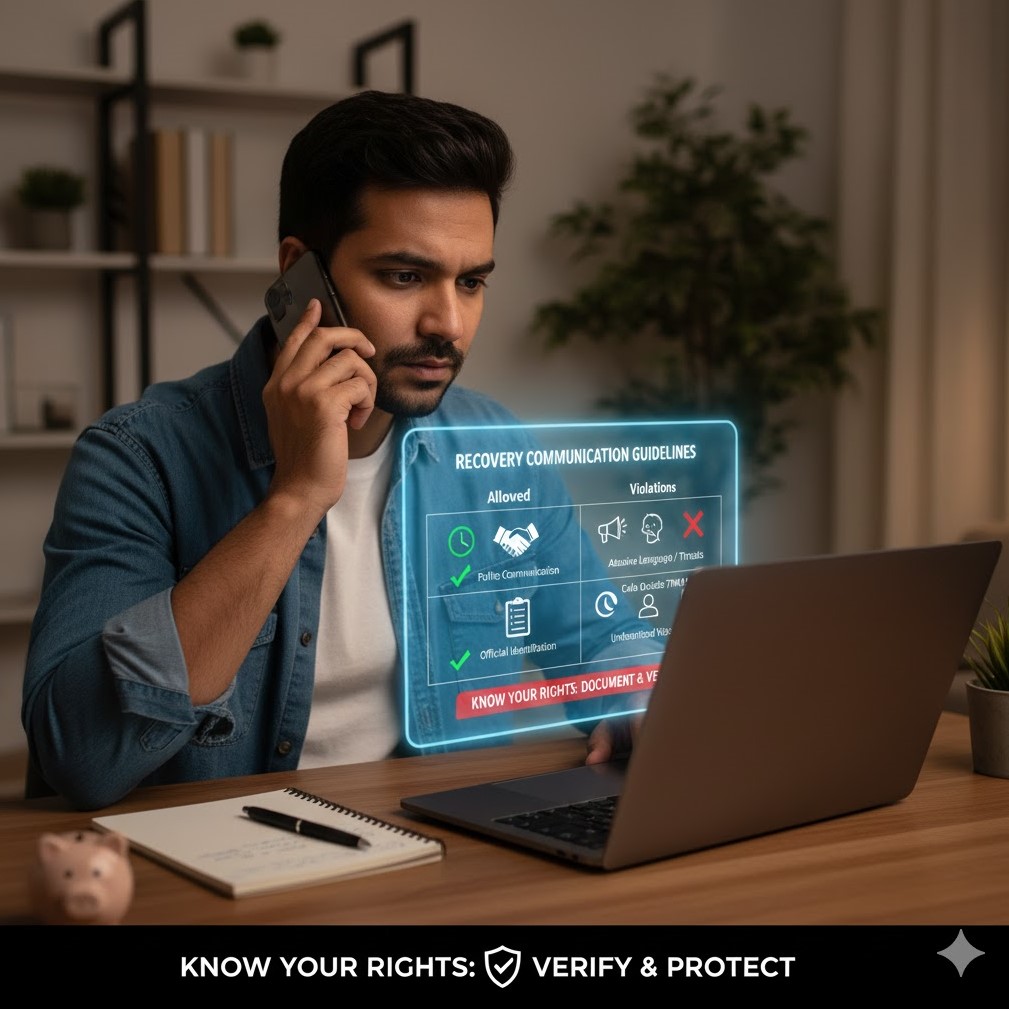
When you are facing the pressure of debt recovery and considering a Loan Settlement, it is critical to know your rights. Aggressive recovery agents often try to blur the lines between legal collection and illegal Bank Harassment.
The Reserve Bank of India (RBI) has established clear and strict guidelines that govern every communication—whether it’s a call, text, or personal visit. Understanding these rules is your first line of defense. By knowing exactly where the line is drawn, you can immediately identify violations and take Legal Support action.
1. The Non-Negotiable Time Boundary (The Most Common Violation)
The most frequently violated and easiest rule to spot is the timing restriction, as clearly mandated by the RBI’s Fair Practices Code:
-
The Rule: Recovery agents can only contact a borrower (via call, text, or visit) between 7:00 AM and 7:00 PM. (Note: Some older documents mention 8:00 AM, but 7:00 AM to 7:00 PM is the widely reinforced standard.)
-
The Violation: Any call, text, or visit before 7:00 AM or after 7:00 PM is a direct and serious breach of RBI Guidelines and is illegal Bank Harassment.
-
Actionable Step: Immediately document the Date and Exact Time of the call/visit. This simple fact is irrefutable evidence for a regulatory complaint.
2. The Privacy and Conduct Boundaries
The bank has a right to recover, but not to publicly shame or abuse you. Know the difference between a professional request and an illegal threat.
| What to Check | Legal/Ethical Guideline (As per RBI) | When is it a Violation? |
| Identification | The agent must carry and willingly show their official ID and an Authorization Letter from the bank. | If the agent refuses to identify themselves, provides vague details, or uses an unidentified personal number. |
| Abusive Language | Communication must be polite and professional; vulgar, threatening, or abusive language is strictly prohibited. | If the agent uses any word that threatens your physical safety, false arrest, or public humiliation. |
| Third-Party Contact | The agent cannot disclose your debt details to your friends, neighbors, or workplace unless they are a co-borrower/guarantor. | If they call your employer or relative and mention your debt amount or default status. |
| Visit Location | The place of contact must be acceptable to you. Agents cannot enter your home without your permission. | If they enter your property without consent, refuse to leave when asked, or turn up repeatedly unannounced and create a scene. |
3. How to Use This Knowledge for a Loan Settlement
Understanding these guidelines provides powerful leverage. Once you document a clear violation, your focus shifts to official channels:
-
Immediate Documentation: Log the violation details meticulously. Save screenshots, call records, and witness accounts.
-
Formal Complaint: Send a detailed complaint, citing the specific RBI rule violated, to the bank’s Grievance Redressal Officer (GRO).
-
Regulatory Escalation: If the bank fails to act within 30 days, file a complaint with the RBI Integrated Ombudsman Scheme (RB-IOS) via their CMS portal (https://cms.rbi.org.in/).
A bank facing an RBI complaint due to clear guideline violations is far more motivated to negotiate a swift and professional Loan Settlement to eliminate the regulatory risk, rather than risk heavy penalties by continuing the illegal Bank Harassment.
Need Legal Support to fight harassment and negotiate your debt?
Contact Us today. Our experts can help you assess communication compliance, file effective complaints, and secure a favorable Loan Settlement resolution.