
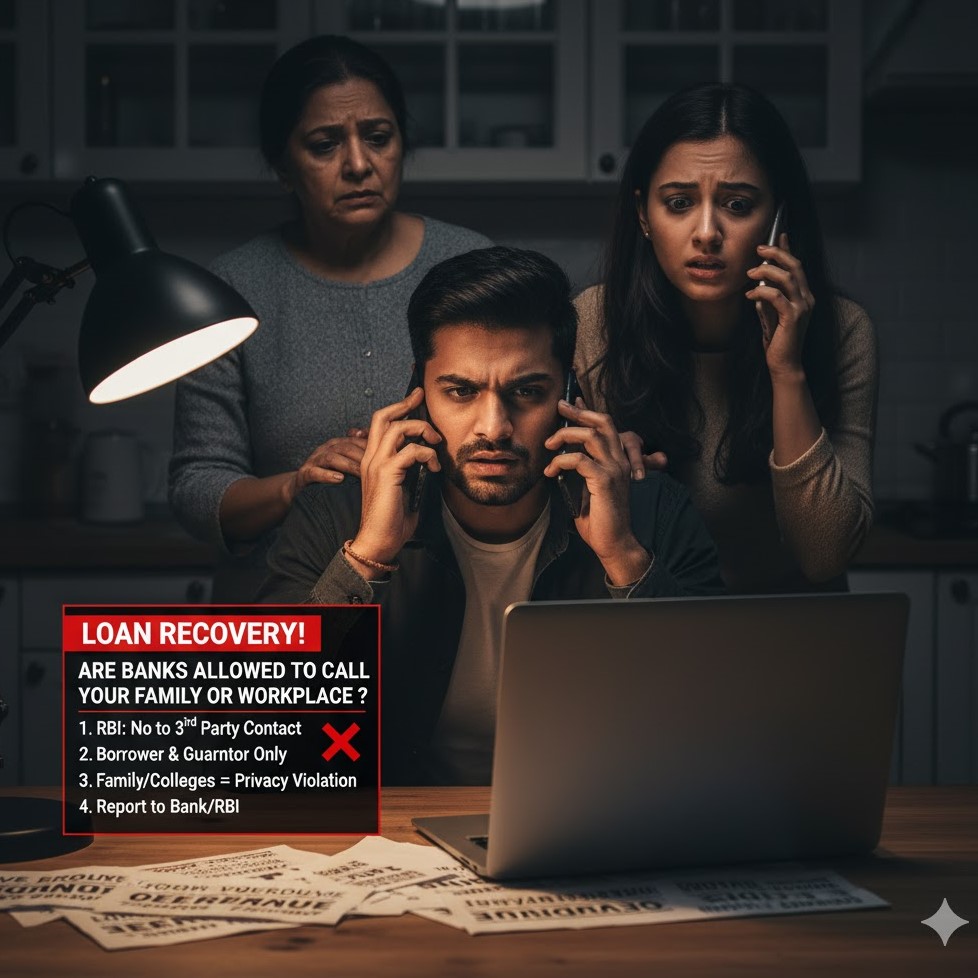
The pressure of an unpaid loan should never escalate into public humiliation or an invasion of your privacy. If a bank or its recovery agents start calling your family members, friends, or workplace to discuss your debt details, they are committing a serious violation of your rights and the RBI’s Fair Practices Code.
This aggressive and illegal tactic, known as Bank Harassment, is strictly prohibited in India. Taking immediate, structured legal steps is essential to stop the abuse and hold the lender accountable.
Know Your Fundamental Right: Privacy is Non-Negotiable
The RBI guidelines clearly state that the details of your loan are confidential and cannot be disclosed to unauthorized third parties.
- The Violation: Recovery agents cannot contact your friends, relatives, colleagues, or employer to discuss your debt status, due amount, or recovery status, unless they are a co-borrower or guarantor on the loan. The exception is contacting them only to trace you if you are unreachable.
- The Consequence: Revealing private financial information to third parties is a direct breach of confidentiality, a form of harassment, and grounds for severe regulatory action against the bank.
Step 1: Document the Violation Rigorously
The key to fighting back against Bank Harassment is having irrefutable evidence.
- Log Details: Record the Date, Time, and Name of the agent who made the call to the third party (if known).
- Witness Statement: Immediately get a written statement (email or recorded message) from the family member or employer confirming the call, the bank/agency they claimed to represent, and exactly what debt information was disclosed. This witness statement is your most powerful piece of evidence.
- Collect Phone Numbers: Note the phone number the agent used to call the third party.
Step 2: Formal Complaint to the Lender
You must formally put the bank on notice that its agents are breaking the law.
- Target the GRO: Send a detailed written complaint (email or registered post) to the bank’s Grievance Redressal Officer (GRO) or Principal Nodal Officer. Their contact details are mandatory on the bank’s official website.
- Cite the Violation: State clearly that the agent violated RBI guidelines by disclosing private loan information to unauthorized third parties (naming the person, their relationship to you, and the date of the call).
- Demand Action: Demand an immediate end to all contact with your family/workplace and action against the offending agent/agency within 30 days.
Step 3: Escalate to the RBI Ombudsman (The Power Move)
If the harassment continues or the bank fails to resolve your complaint within 30 days, immediately escalate the matter to the regulator.
- File an RBI Complaint: Lodge a complaint with the RBI Integrated Ombudsman Scheme (RB-IOS) via their online CMS portal.
- Attach Evidence: Submit your initial complaint to the bank, the bank’s inadequate response (or lack thereof), and the witness statement you collected in Step 1.
- The Result: The RBI treats these confidentiality breaches as severe regulatory misconduct. The bank faces potential penalties, which often compels them to immediately call off the agents and seek a quick, professional resolution, making the path to a Loan Settlement much smoother.
By taking these steps, you immediately assert your legal rights and shift the power dynamic. You move the conversation away from emotional Bank Harassment and towards a structured, professional debt resolution.
Ready to stop the harassment and negotiate your debt?
Contact Us today to connect with our expert panel for legal support and guidance on securing a fair Loan Settlement.