
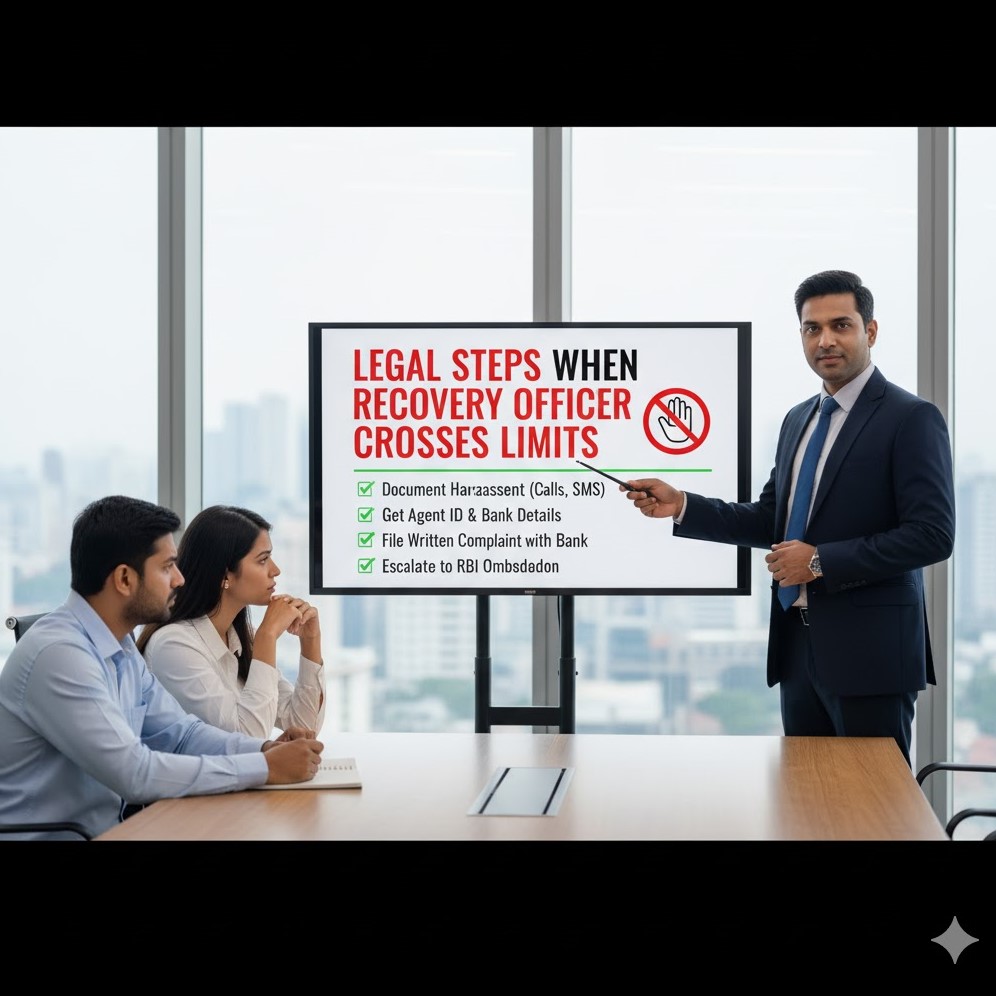
When financial difficulty leads to loan default, the law still protects your dignity. If a bank recovery officer crosses ethical boundaries—using threats, abusive language, public shaming, or calling outside the prescribed hours—you are experiencing Bank Harassment, and you have powerful legal recourse.
Taking swift, documented action is the only way to stop the abuse and force the bank to engage in a professional resolution process, such as a Loan Settlement.
1. Step 1: Document Everything (The Foundation of Your Case)
The burden of proof lies with you. Every single instance of unethical behavior must be meticulously documented. This is your evidence to present to authorities.
- Log the Incident: Record the Date, Time, and Duration of every call or visit. RBI guidelines mandate contact only between 7:00 AM and 7:00 PM.
- Identify the Agent: Note the Recovery Agent’s Name and the Agency’s Name. Always ask for their ID and authorization letter if they visit.
- Record the Violation: Write down the exact threatening or abusive words used (e.g., “I will get you arrested,” “We will tell your neighbors,” “You are a fraud”).
- Preserve Proof: Save all threatening SMS, WhatsApp chats, or emails. If permissible and safe, record the conversation (though it’s best to consult a lawyer on admissibility).
2. Step 2: Formal Complaint to the Bank (The Mandatory First Move)
You must give the bank a formal chance to correct the misconduct.
- Target the GRO: Write a detailed email or send a registered post to the bank’s Grievance Redressal Officer (GRO) or Principal Nodal Officer. Their contact details are legally required to be on the bank’s website.
- Attach Your Log: Include your detailed harassment log and copies of the evidence (e.g., screenshots).
- Demand Action: Clearly state that the agent’s actions violate the RBI’s Fair Practices Code and demand immediate action against the officer/agency, along with a written response within 30 days.
3. Step 3: Escalate to the Regulator (The Ultimate Leverage)
If the bank fails to respond within 30 days or the harassment continues after their response, you must escalate the complaint to the Reserve Bank of India.
- File with the Ombudsman: Lodge a complaint with the RBI Integrated Ombudsman Scheme via their online CMS portal (https://cms.rbi.org.in/).
- Attach Proof of Bank Failure: Submit your original complaint to the bank, the bank’s inadequate response (or lack of response), and your harassment log.
- The Power: The RBI takes recovery agent misconduct very seriously. They can impose heavy penalties on the bank, forcing the immediate cessation of the harassment and accelerating the need for the bank to professionally resolve the account via a Loan Settlement.
4. Step 4: Police Action (For Criminal Threats)
For severe cases involving criminal intimidation, physical threats, or harassment that risks your safety, the police must be involved.
- File an FIR: Immediately file a First Information Report (FIR) at your local police station against the recovery agent and the agency they represent.
- Cite IPC Sections: Your lawyer can advise on citing relevant sections of the Indian Penal Code (IPC), such as Section 503 (Criminal Intimidation). A police report creates a criminal record and is the strongest deterrent against future illegal actions.
Taking these legal steps is not about avoiding repayment; it is about enforcing your fundamental right to dignified treatment. A bank facing a formal RBI complaint is far more incentivized to settle the account via a Loan Settlement to eliminate the regulatory risk.
Facing unethical harassment?
Contact Us today for expert legal guidance to file your official complaints, stop the harassment, and initiate your Loan Settlement negotiation from a position of strength.