
The Reserve Bank of India (RBI) has established clear RBI Guidelines that protect borrowers from threats, abuse, and illegal contact during the loan recovery process. These rules are robust, prohibiting everything from calling after 7:00 PM to unauthorized personal visits.
Yet, Bank Harassment remains rampant. Why? Because the bank’s recovery agent knows the rules, but the stressed borrower often does not.
This raises a critical question: Should the RBI make it mandatory for every bank and NBFC to provide a simple, upfront document detailing a borrower’s legal rights the moment a loan enters the recovery stage? We believe the answer is a resounding YES.
Why Right-to-Know is the Ultimate Anti-Harassment Service
Currently, the onus is on the borrower to research complex RBI Master Circulars when they are already under immense financial and emotional pressure. Making the rights explicitly known to the borrower would transform the recovery landscape:
-
Creates an Instant Firewall: If a borrower immediately knows the agent cannot call outside 7:00 AM to 7:00 PM or threaten them with arrest, they gain instant confidence to push back and document the violation. This severely limits the tools of Bank Harassment.
-
Holds Agents Accountable: Agents thrive on the borrower’s ignorance. A document signed by the borrower acknowledging their rights turns the collection process into a legally accountable transaction, rather than a strong-arm tactic.
-
Fast-Tracks the Loan Settlement Process: When harassment fails, the lender is forced to transition to a professional, negotiation-based resolution. This accelerates the process toward a dignified Loan Settlement, which is ultimately beneficial for both the bank (closing the Non-Performing Asset) and the borrower (achieving debt freedom).
-
Reduces RBI Ombudsman Load: Empowered borrowers would handle basic violations internally, allowing the RBI Integrated Ombudsman Scheme (RB-IOS) to focus on systemic failures and severe criminal misconduct, rather than simple timing violations.
The Key Rights That Must Be Disclosed Upfront
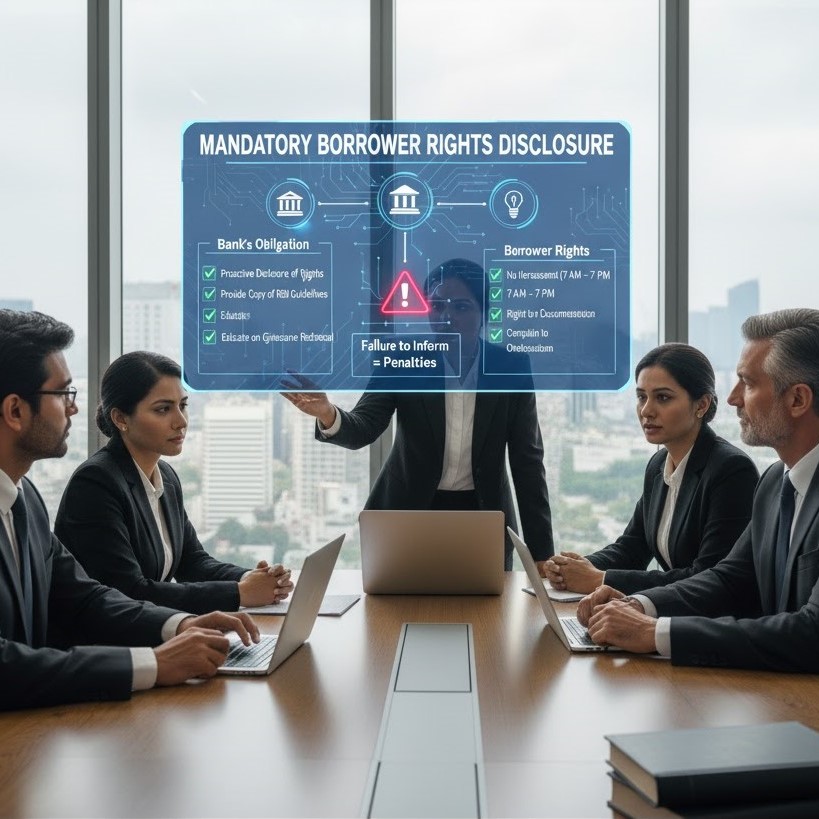
Every notice of default or initiation of recovery should be accompanied by a simple, one-page summary highlighting:
-
Contact Timings: The 7:00 AM to 7:00 PM restriction.
-
Identification Requirement: The agent must show their ID and authorization letter from the bank.
-
Prohibited Conduct: The absolute ban on abusive language, threats of violence, or disclosure of debt details to third parties (family/employers).
-
Grievance Channel: Clear contact information for the bank’s Grievance Redressal Officer (GRO) and the steps to file a complaint with the RBI Ombudsman.
The Road Ahead: Empowering Borrowers
While the RBI has made tremendous strides in regulatory protection, the current setup is like having a robust safety manual hidden in the back office. It is time for the RBI to make the borrower’s rights a mandatory, easily accessible component of the recovery process.
Empowerment through information is the cheapest and most effective way to eliminate Bank Harassment.
Facing harassment and ready to assert your legal rights?
Contact Us today. Our experts specialize in leveraging RBI guidelines to stop the abuse and negotiate your path to a Loan Settlement resolution.