
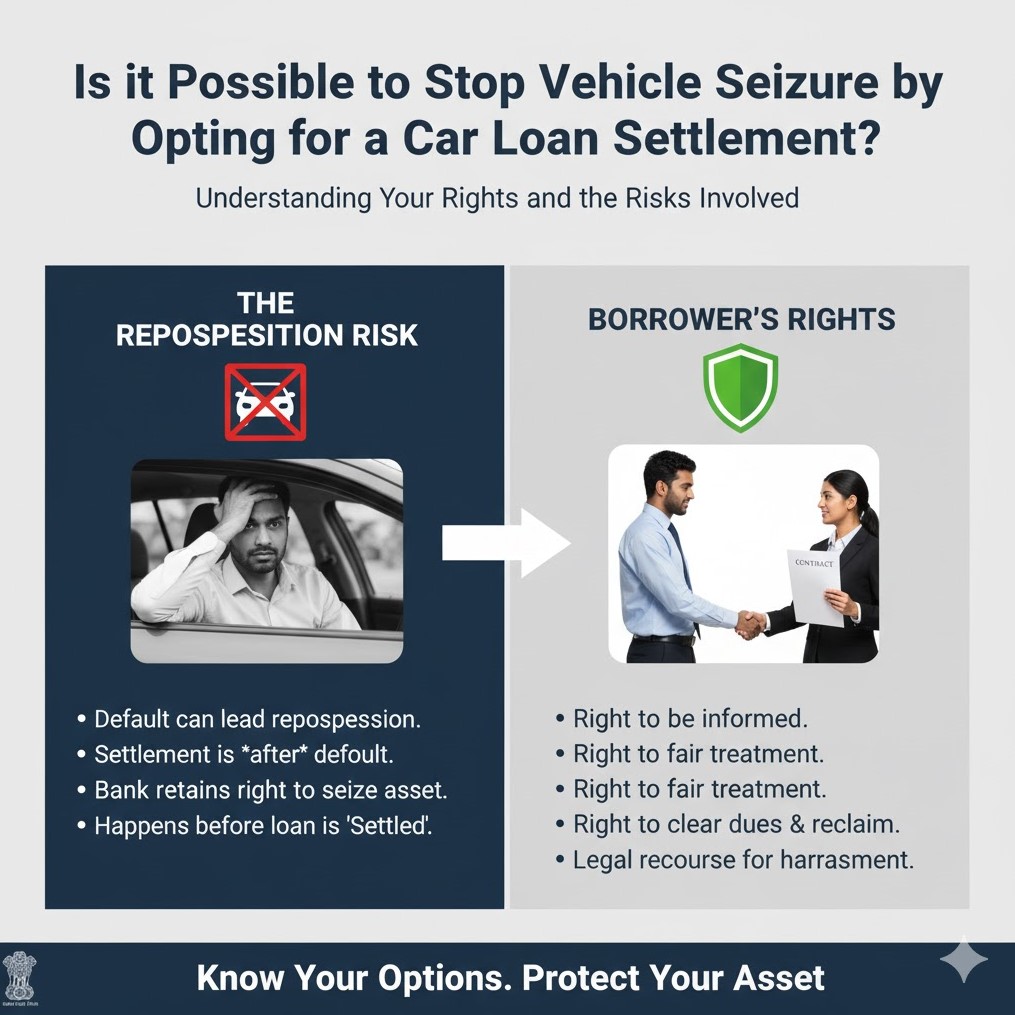
When you face difficulties repaying a Car Loan and are already dealing with the intimidation tactics of recovery agents (Bank Harassment), the threat of vehicle repossession is overwhelming. Since a car loan is a secured loan, the vehicle itself is the bank’s collateral.
The direct answer is that a request for a Loan Settlement (One-Time Settlement or OTS) does not automatically stop a repossession if you are already in default. However, a strategically executed settlement request is the single most effective defense to halt seizure proceedings, provided you act quickly and professionally.
1. The Bank’s Calculation: Repossession vs. Settlement
The bank has a legal right to seize the vehicle upon default. However, repossession is a costly, time-consuming process for them.
- Repossession Costs: The bank incurs expenses for recovery agents, storage, legal notices, and auction proceedings. The final auction price is often lower than the outstanding loan, leaving the bank with a deficiency balance and more paperwork.
- Settlement is Quicker Cash: A well-structured Car Loan Settlement offer for a lump sum (even a reduced amount) provides the bank with guaranteed, immediate cash recovery. For the bank, an OTS can be a better business decision than a drawn-out repossession.
- The Strategic Pause: By initiating a formal negotiation, you give the bank a constructive path forward. This pause in action replaces the bank’s need to chase you with the promise of a final, profitable resolution.
2. Your Plan: Using Settlement to Halt Seizure
To use a settlement request as a shield, you must present a concrete plan that is better for the bank than repossession.
A. Propose an Immediate Lump Sum
When approaching the bank for a settlement, emphasize that you have the lump sum amount ready and can execute the payment within a very short, specified period (e.g., 7-15 days). This urgency compels the bank to freeze the repossession process.
B. Demand a “Stay” on Seizure
Your negotiation, especially if handled by a legal expert, should include the demand that the bank formally issue a communication (via email or formal letter) confirming they will put the repossession and all Bank Harassment activities on hold until the settlement deadline. This creates a paper trail and holds the bank accountable.
C. Leverage Harassment Documentation
Any prior Bank Harassment (illegal seizure attempts, verbal threats, calls outside RBI hours) should be meticulously documented and used as leverage. The bank knows that a borrower with a strong case of misconduct can escalate the issue to the RBI Ombudsman or Consumer Courts, making a quiet, quick settlement the preferable option.
3. The Final Victory: Full Legal Protection
Your vehicle is only truly safe when the Car Loan Settlement amount has been paid and you receive the final Settlement Letter and No Dues Certificate (NDC).
- Account Closure: This letter legally extinguishes the debt, nullifying the bank’s right to the collateral (the vehicle).
- End of Harassment: With the account closed, the mandate for recovery agents ends immediately, securing your peace of mind.
A well-executed Car Loan Settlement is a potent legal tool to take back control, prevent illegal seizure, and achieve Loan Free status on a secured debt.