Facing overwhelming credit card debt is stressful enough without the added fear of being scammed. As you explore options like credit card loan settlement, you need to be extremely vigilant. The debt relief sector is unfortunately a breeding ground for fraudulent operators looking to exploit those already in distress.
At Bank Harassment, we empower you with the knowledge to manage your debt resolution safely, spot a fraud alert, and choose a trusted partner.
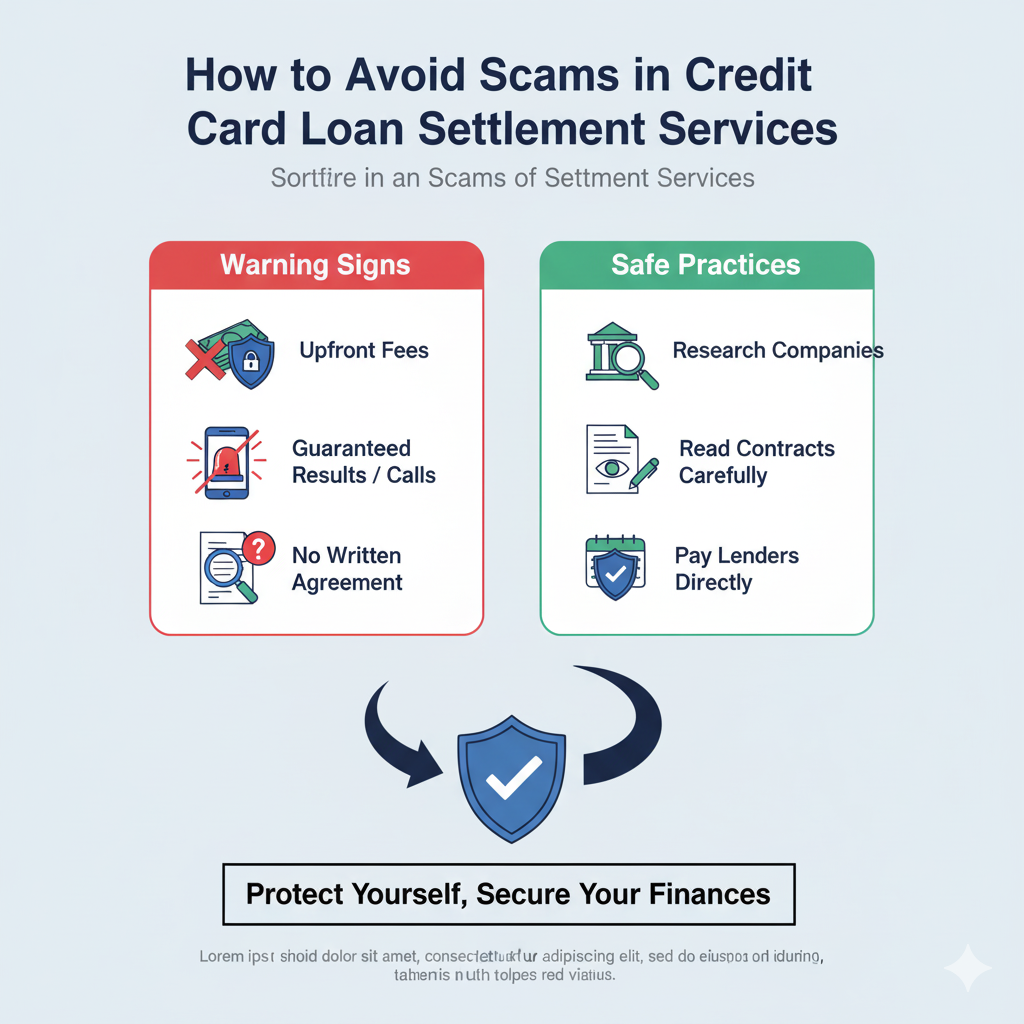
Red Flags: How to Spot a Credit Card Settlement Scam
Scammers are masters of applying pressure and making promises that sound too good to be true. Here are the warning signs you must look out for:
1. The Upfront Fee Demand
This is the biggest red flag. A genuine, ethical debt settlement service should never ask for a large, non-refundable fee before they have settled any of your debt.
- Scam Tactic: They pressure you to pay a ‘registration fee,’ ‘consultation charge,’ or ‘initial payment’ that supposedly guarantees a settlement.
- Safety Check: Reputable firms in the debt resolution space generally charge a fee only after they have successfully negotiated a settlement and a portion of your debt has been paid. Never pay a significant fee upfront.
2. Guaranteed Results & Unrealistic Savings
Debt settlement is a negotiation, and no outcome is 100% guaranteed.
- Scam Tactic: They promise to reduce your debt by a massive percentage (e.g., “We guarantee 70% savings!”) or guarantee that your bank will settle.
- Safety Check: Be wary of absolutes. A trusted partner will offer a realistic range of potential savings based on your specific financial situation, not a baseless guarantee.
3. Instructing You to Stop Paying Immediately
While a debt settlement process often involves defaulting on your loan to prompt the bank to negotiate, blindly following a non-regulated company’s advice to stop payments can severely damage your credit score without the intended benefit.
- Scam Tactic: They insist you immediately stop all payments to the bank and pay the money directly into a ‘special account’ they control.
- Safety Check: The ‘special account’ or ‘escrow’ should be an account you own and control, and you should only authorize payments to the bank once a signed, written settlement agreement is in place.
4. Lack of Documentation and Transparency
A legitimate service will have a clear, written agreement detailing their fees, the settlement process, and the potential risks (like credit score impact).
- Scam Tactic: They refuse to provide a detailed, signed contract, relying only on verbal assurances, or their contract is full of vague legal jargon.
- Safety Check: Always demand a written agreement. Once a settlement is reached, ensure you receive a formal, written “No Dues Certificate” or settlement letter directly from your bank.
Choosing a Trusted Partner and Fighting Bank Harassment
Navigating debt settlement requires expertise. Your goal is to find a trusted partner who respects your rights while effectively negotiating with your creditors.
Facing Bank Harassment?
If you are dealing with aggressive recovery agents or unacceptable bank harassment, remember you have rights under law. Debt settlement negotiations should be conducted with dignity.
If you feel harassed:
- Document everything: Note the date, time, name of the caller/agent, and the content of the conversation.
- Report the harassment: Banks have an internal grievance redressal mechanism. If that fails, escalate your complaint to the Reserve Bank of India (RBI) Ombudsman.
- Know the Rules: Collection agents cannot use abusive language, call at odd hours (before 9:00 AM or after 7:00 PM), or threaten legal action they cannot back up.
Need Help? Contact Us!
If you have encountered a fraud alert, suspect you are being scammed, or are facing relentless bank harassment, you don’t have to fight this battle alone.
Bank Harassment is here to guide you toward ethical and compliant debt resolution services.
Contact Us today for a confidential consultation. Let us help you find a truly trusted partner and reclaim your financial peace of mind.