
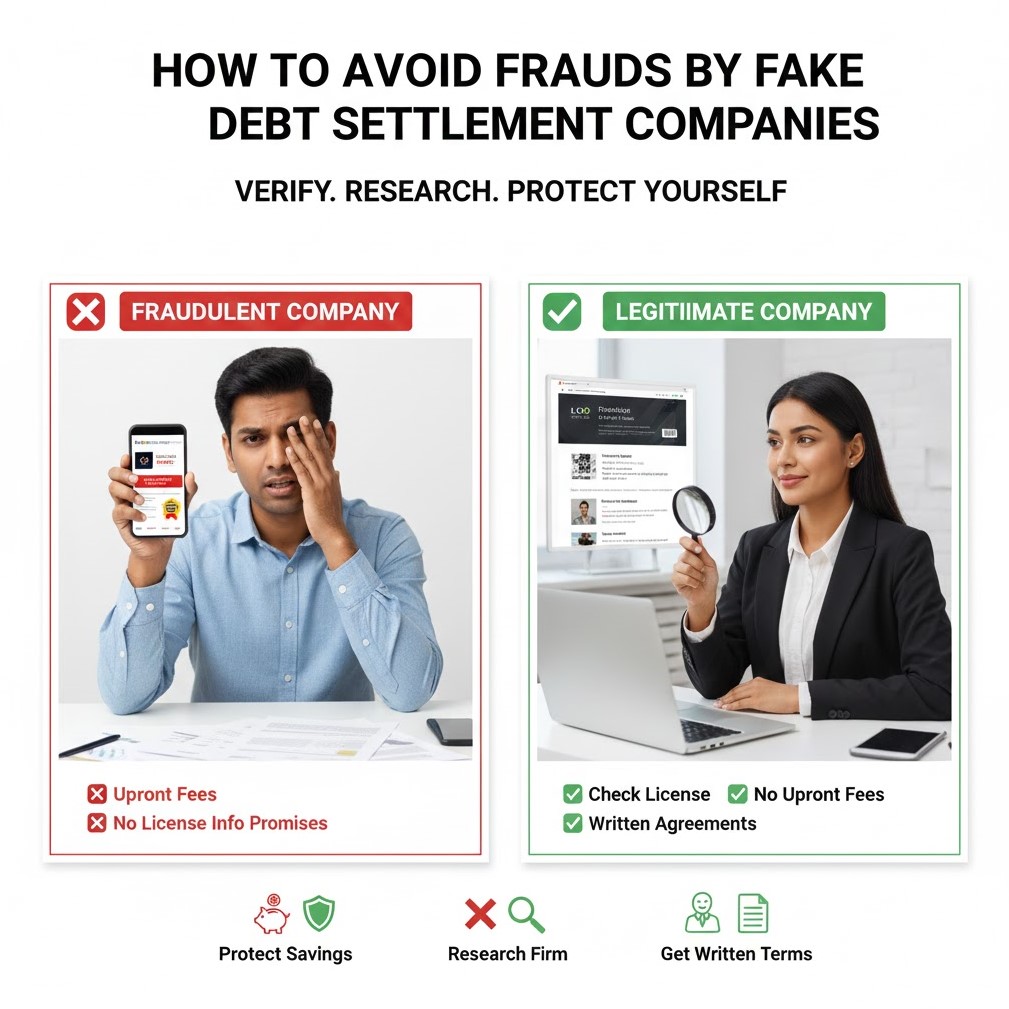
When you’re struggling with debt and facing aggressive Bank Harassment, the promise of quick loan relief can be incredibly tempting. Unfortunately, the debt relief market in India is largely unregulated, making it a prime target for fraudulent companies looking to exploit your desperate situation.
Protecting yourself requires vigilance and knowing the clear red flags. Dealing with fake companies won’t stop the harassment; it will only create new problems. Here is your definitive guide on how to spot and avoid scams, ensuring you only deal with trusted services.
1. The Biggest Red Flag: The “Stop Paying Your Bank” Scam
The most common and damaging fraud technique involves advising you to stop paying your lender immediately and funneling the money elsewhere.
-
The Claim: Fake debt settlement companies instruct you to stop paying your EMIs and instead, deposit those funds into an “escrow account” or the settlement company’s own account. They claim this money will accumulate for the final settlement offer.
-
The Reality: When you stop paying your EMIs, your loan immediately goes into severe default, your penalties and interest skyrocket, and your credit score is destroyed. The company may disappear with your accumulated funds, leaving you with massive debt, a ruined credit rating, and the harassment returning stronger than ever.
-
The Rule: A genuine trusted service acts as a negotiator and legal advisor, not a payment collector. NEVER pay your settlement amount, or funds intended for settlement, to the company itself. The final lump sum must be paid directly to the bank via DD or official bank transfer.
2. Unrealistic Promises and Upfront Fee Demands
Scammers rely on desperate borrowers being blinded by promises of easy, fast relief and an end to their troubles.
| Red Flag | Fraud Alert | What a Trusted Service Does |
| Guaranteed Waivers | They promise a specific, massive discount (e.g., “We guarantee 60% loan relief!”) regardless of your financial situation. | They provide a realistic estimate and explain that the final amount is solely at the bank’s discretion. |
| Large Upfront Fees | They demand a significant, non-refundable fee (often 10,000 to 50,000 INR) before any negotiation work has even started. | Fees are usually milestone-based or a percentage of the debt saved, and they do not charge exorbitant fees just to start a conversation. |
| Credit Repair Claims | They guarantee they can “clean” your CIBIL report and remove the “Settled” status. | They correctly inform you that the “Settled” status is a negative mark that remains for up to seven years and cannot be legally removed. |
3. Due Diligence: Vetting Your Partner
Before signing any contract, verify the company’s legitimacy to ensure you are dealing with a trusted service that can protect you from the bank.
-
Verify Corporate Registration: Ask for the company’s Corporate Identity Number (CIN/LLPIN). Check the number on the Ministry of Corporate Affairs (MCA) website to confirm it is a genuinely registered entity in India.
-
Check Legal Credentials: Does their expert panel include qualified legal advisors or advocates? This is non-negotiable, as you need legal muscle to stop harassment and enforce borrower protection rights.
-
Review Documentation: Insist on receiving a full, written contract detailing every service and fee. If the contract is vague, confusing, or mentions that they will handle your settlement funds, walk away.
4. Prioritize Legal Safety and Harassment Cessation
A genuine debt settlement company prioritizes your legal safety above all else.
-
Legal Firewall: A trusted service will immediately send a formal legal notice to the bank upon engagement, demanding that all future recovery contact be directed to them. This is the fastest, safest way to stop direct Bank Harassment.
-
Written Agreements Only: They will insist on a formal, written Loan Settlement Letter from the bank before you pay the final lump sum. This protects you from the bank’s verbal agreements often used by aggressive recovery agents.
-
The No Dues Certificate (NDC): The company should emphasize that their job is not finished until you receive the NDC—the legal proof that the debt is 100% closed, which is your final shield against future harassment.
By staying alert to these red flags and prioritizing a transparent, legally compliant partner, you can successfully achieve loan relief and avoid falling victim to predatory debt settlement scams that only make your problems worse.
Need help verifying a debt settlement offer?
Contact Us today for a confidential, no-obligation assessment of your debt and guidance on choosing a trusted service to secure your peace of mind.