
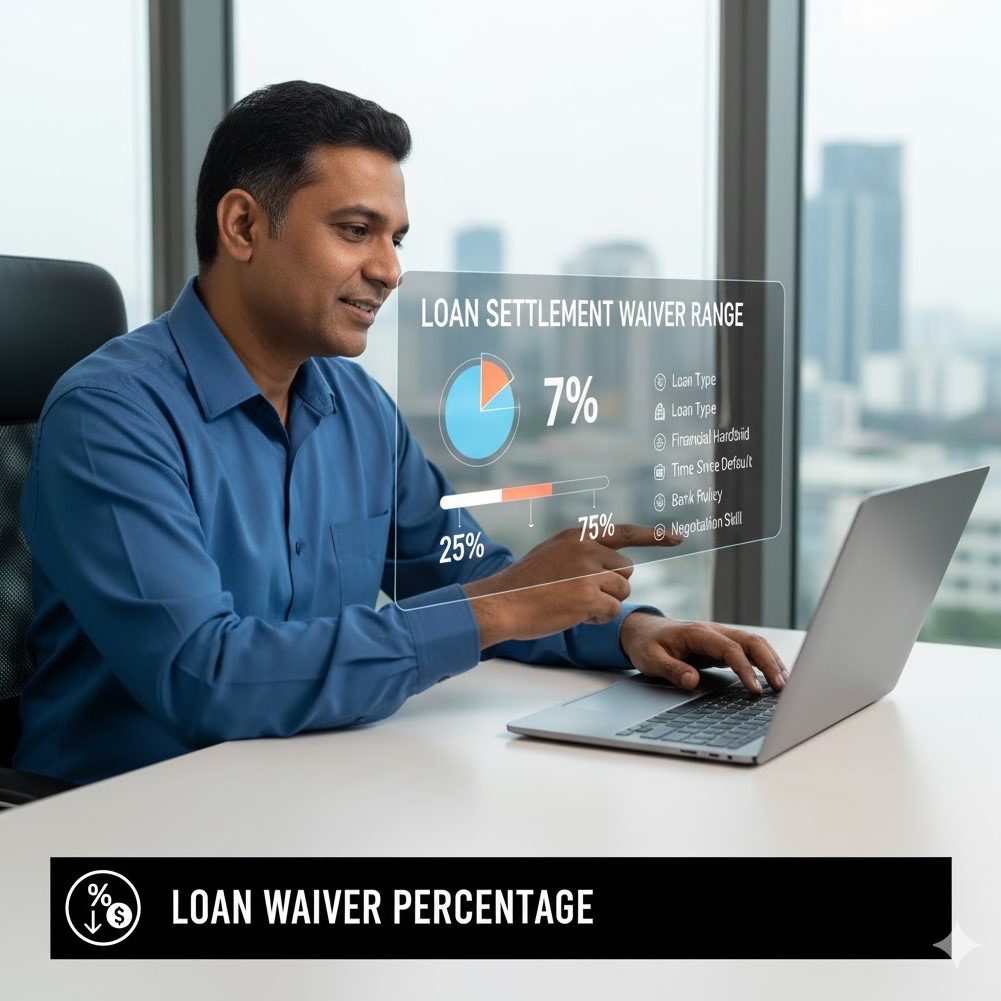
When you’re seeking a Loan Settlement (One-Time Settlement or OTS) to escape overwhelming debt and stop Bank Harassment, the most important question is, “How much can I realistically save?”
There is no fixed percentage that banks are mandated to waive. The final settlement amount is a dynamic figure, highly dependent on internal bank policy and your negotiation leverage. However, based on industry averages, successful settlements often fall within a predictable range.
1. The Typical Waiver Range (Approximate Averages)
The waiver percentage is calculated on the Total Outstanding Amount (Principal + Interest + Penalties + Fees), not just the original principal amount. The highest waivers are usually on unsecured loans where the debt is old.
| Debt Type/Status | Typical Waiver Range (Reduction from Total Outstanding) |
| Credit Card Debt | 35% – 60% Waived |
| Personal Loans | 25% – 50% Waived |
| Very Old NPA (2+ years in default) | Waiving the majority of penal interest and charges (can lead to up to 60% overall reduction). |
| Secured Loans (Home/Car) | 10% – 30% Waived (Waivers are lower as the bank can seize the asset). |
Crucial Distinction: A Loan Settlement is not a “loan write-off.” Banks write off loans internally for tax and accounting purposes after the debt has been fully provisioned (usually after 4 years), but the borrower remains legally liable for repayment. A settlement is the negotiated agreement that waives the liability.
2. Factors That Maximize Your Waiver Percentage
Your ability to secure a high waiver and end Bank Harassment depends on these key leverage points:
A. The Age of the Debt (The Strongest Lever)
- Older Debt, Higher Waiver: Once a loan crosses 180 days (6 months) of continuous default, the bank starts the process of classifying it as a Non-Performing Asset (NPA). Once the debt is a fully-provisioned NPA (after 1-2 years), the bank’s main objective is cash recovery. They are willing to accept a higher waiver percentage to get guaranteed cash now, rather than facing the uncertain and costly process of long-term litigation.
B. Your Ability to Pay a Lump Sum
- One-Time Settlement (OTS): A guarantee of a single, immediate, lump-sum payment is the biggest incentive for a bank. They will always offer a higher waiver for an OTS than for a staggered payment plan, as it eliminates recovery risk and costs instantly.
C. Documented Financial Hardship
- If you can provide convincing proof of genuine hardship (job loss, severe medical issues, closure of a business), it tells the bank that prolonged legal action will yield little or no result. This encourages them to settle at a lower figure and avoid further cost.
D. The Threat of Litigation Costs
- For unsecured debts (like Credit Cards or Personal Loans), the bank knows filing a civil suit is expensive, time-consuming, and offers no guarantee of recovery against a borrower with no assets. The threat of incurring these costs gives you significant bargaining power for a higher waiver.
3. Ending Harassment: Your Negotiation Strategy
To maximize your waiver and ensure the settlement closes the chapter on Bank Harassment:
- Do Not Accept the First Offer: The bank’s initial offer is merely the starting point. Be patient and hold your ground, referencing your documented inability to pay the full amount.
- Demand a Written Agreement: NEVER pay the settlement amount until you have the formal, written Settlement Letter from the bank on their letterhead, explicitly stating the payment is in “Full and Final Settlement” of the entire debt. This legally binds them and is your guarantee that recovery attempts and harassment will stop.
A successful Loan Settlement is your pathway to peace. Knowing the typical waiver percentages allows you to negotiate strategically and ensure you get the best possible deal.