
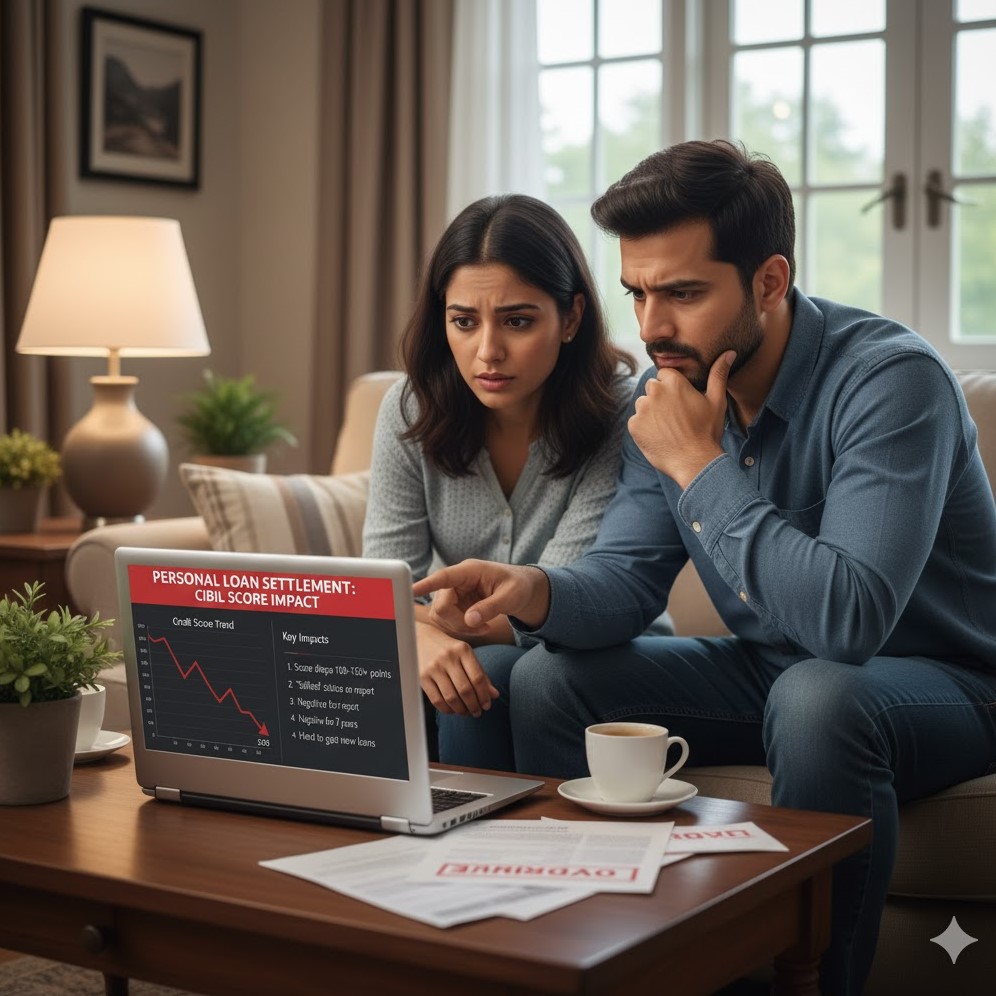
Facing overwhelming personal loan debt can be one of the most stressful experiences. When monthly payments become unmanageable, you might start considering a Personal Loan Settlement—an agreement with your lender to pay a reduced, lump-sum amount to close the account.
While this offers immediate relief, it’s crucial to understand the long-term impact on your financial health, especially your CIBIL Score.
The Significant Impact on Your CIBIL Score
A personal loan settlement is not the same as a full loan closure, and this distinction is where the damage to your CIBIL Score occurs.
- Status as “Settled”: When you settle a loan for less than the full outstanding amount, your lender reports the account to credit bureaus like CIBIL as “Settled,” not “Closed” or “Paid in Full.”
- Credit Score Drop: The “Settled” status signals to future lenders that you did not fulfill your original financial obligation completely. This is a severe negative marker that can cause your CIBIL Score to drop significantly—often by 50 to 150 points or more, depending on your prior credit history.
- Long-Term Visibility: The negative “Settled” mark remains on your credit report for up to seven years. Even if your score gradually improves, this status is visible to potential lenders, making it difficult to secure new credit, loans, or credit cards in the future, and potentially resulting in higher interest rates.
- Reduced Creditworthiness: Lenders view a settled account as a sign of high-risk behavior and a lack of financial discipline. This severely limits your creditworthiness for years.
In short: Loan settlement provides quick debt relief but comes at a high and long-lasting cost to your CIBIL Score and future borrowing capacity. It should only be considered as an absolute last resort after exploring all other options like loan restructuring or deferment.
When Debt Becomes Distress: Dealing with Bank Harassment
The pressure of outstanding debt often leads to stressful and unacceptable behavior from recovery agents, which can quickly escalate to Bank Harassment. Knowing your rights is essential during this challenging time.
What constitutes Bank Harassment?
- Excessive Communication: Frequent, persistent, or intimidating calls to you, your family, friends, or workplace.
- Inappropriate Timings: Calling or visiting outside of the regulated hours (typically before 8:00 AM or after 7:00 PM).
- Threatening Behavior: Using abusive language, verbal abuse, physical threats, or unwarranted legal threats.
- Public Humiliation: Visiting your workplace or neighborhood without prior notice to shame you into paying.
The Reserve Bank of India (RBI) has strict guidelines against such coercive practices. You have the right to be treated with dignity and respect, even during a recovery process.
If you are facing harassment:
- Document Everything: Keep a record of all communication, including dates, times, names of callers/agents, and the nature of the harassment.
- Know Your Lender’s Details: Demand the name and contact details of the recovery agent and their agency.
- Escalate Internally: File a formal written complaint with the bank’s internal Grievance Redressal Officer.
- File a Police Complaint: If the harassment involves threats or physical intimidation, file a police complaint (FIR/Non-Cognizable Report).
- Approach the Regulator: Lodge a complaint with the RBI under the Integrated Ombudsman Scheme if the bank fails to resolve your grievance within 30 days.
Take Control of Your Situation
If you are struggling with personal loan repayment and fear both CIBIL damage and Bank Harassment, remember you have options and rights. Do not let fear isolate you.
Contact Us Today to understand your legal rights, explore alternatives to loan settlement, and seek assistance in dealing with unfair or harassing recovery practices. Get the informed guidance you need to protect your financial and mental well-being.