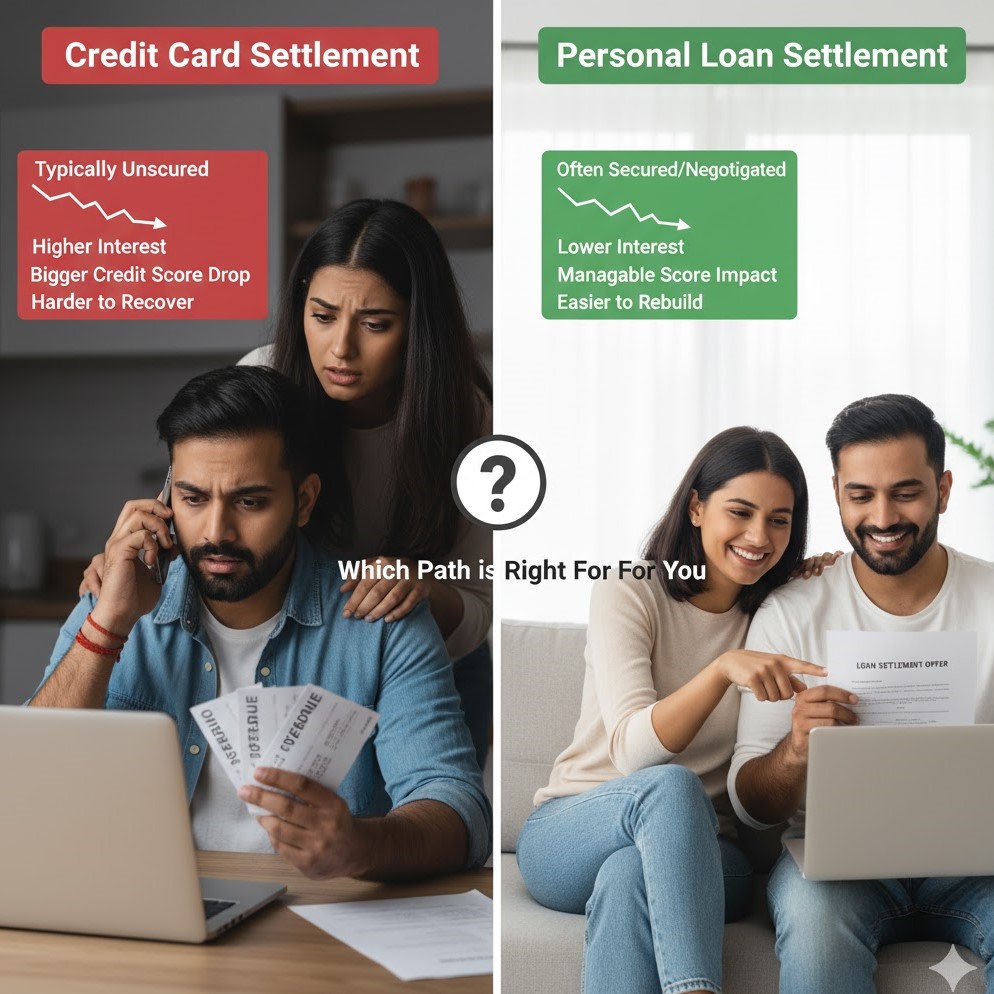
Facing overwhelming debt often leads to a single critical solution: Loan Settlement. This process involves negotiating with your lender to pay a reduced lump-sum amount to close your debt. While both Credit Card Loan Settlement and Personal Loan Settlement achieve the same end goal—debt closure—they are fundamentally different in the type of debt, the negotiation dynamics, and the specific legal risks.
Understanding these differences is crucial, especially when you’re battling Bank Harassment and trying to make a strategic move toward financial freedom.
1. Nature of the Debt: Revolving vs. Term
The biggest difference lies in how the debt was initially structured, which dictates how the outstanding amount is calculated.
| Aspect | Credit Card Loan Settlement | Personal Loan Settlement |
| Debt Type | Revolving Credit | Term Loan (or Installment Loan) |
| Structure | A credit limit you can reuse. The outstanding balance is highly fluid, driven by transactions, extremely high interest (often 35-42% p.a.), and late fees. | A fixed lump sum borrowed for a fixed period with set EMIs. The original principal and interest rate are clearly defined. |
| Debt Escalation | Rapid and Compounding. The total outstanding amount quickly becomes bloated with high fees and penalties. | Slower and Predictable. Escalation is mainly due to missed EMI interest and late fees. |
| Negotiation Leverage | Often better for the borrower. Since the amount is heavily inflated by fees, banks are more willing to settle for a lower percentage of the total outstanding balance to recover the original principal. | Negotiation is usually tighter. Banks aim for a higher recovery percentage because the outstanding balance is closer to the true principal and agreed-upon interest. |
2. Legal and Harassment Triggers
While both are unsecured debts, the specific legal instruments used by the bank differ, affecting the type of Bank Harassment you may face.
- Cheque Bounce/ECS Risk (Section 138): Both debts carry the risk of a criminal case under Section 138 of the Negotiable Instruments Act if a payment instrument (cheque or ECS/NACH mandate for an EMI) bounces after the bank sends a mandatory notice. However, Personal Loan EMIs often involve clearer, structured mandates, making the Section 138 path a frequent tool for banks to initiate legal pressure.
- Harassment Focus:
- For Credit Cards, agents often emphasize the massive, compounding balance and the threat of a civil suit.
- For Personal Loans, agents frequently resort to threatening the more serious Section 138 or a suit in the Debt Recovery Tribunal (DRT) to coerce immediate payment.
3. Final Documentation and Tax Considerations
Both require an ironclad final agreement to protect you from future claims or renewed Bank Harassment.
- Waiver of Future Interest: For a Personal Loan Settlement, the final letter must explicitly waive the bank’s right to pursue all future interest that was part of the original loan schedule.
- Waiver of Fees/Penalties: For a Credit Card Settlement, the final letter must specifically confirm the waiver of all accumulated interest, late payment charges, and penalty fees.
- Tax Implications: In both cases, the amount of debt that is forgiven (the difference between the original outstanding debt and the settled amount) may be considered taxable income in India. You must consult a tax professional after settlement to prepare for this potential liability.
The Bottom Line: Don’t Negotiate Alone
Regardless of the debt type, settlement is a serious step that results in the account being marked “Settled” on your credit report for up to seven years.
When you’re fighting financial difficulty and facing aggressive Bank Harassment, engaging an expert is critical. A professional can use the differences in the debt type to your advantage, negotiating a lower recovery percentage based on the inflated fees of a credit card or the legal leverage points of a personal loan.
Ready to end the harassment and secure the best settlement for your debt?
Contact Us today for a confidential, expert-guided resolution for your credit card or personal loan debt.