Yes, banks decide your eligibility for a loan settlement based on a few key factors, but the most important one is your ability to prove genuine financial hardship. A settlement is a business decision for a bank, a way to cut losses, not a kindness. For a borrower facing harassment, this process is a crucial step to legally close a debt and end the nightmare.
The Bank’s Mindset: Why a Settlement Is an Option 🏦
A bank would much rather you pay your loan in full. When they offer a settlement, it’s because they’ve concluded that you are genuinely unable to pay the full amount and that a settlement is a better alternative than risking a total loss. They are trying to avoid a long, costly, and uncertain legal battle.
The Key Factors for Eligibility
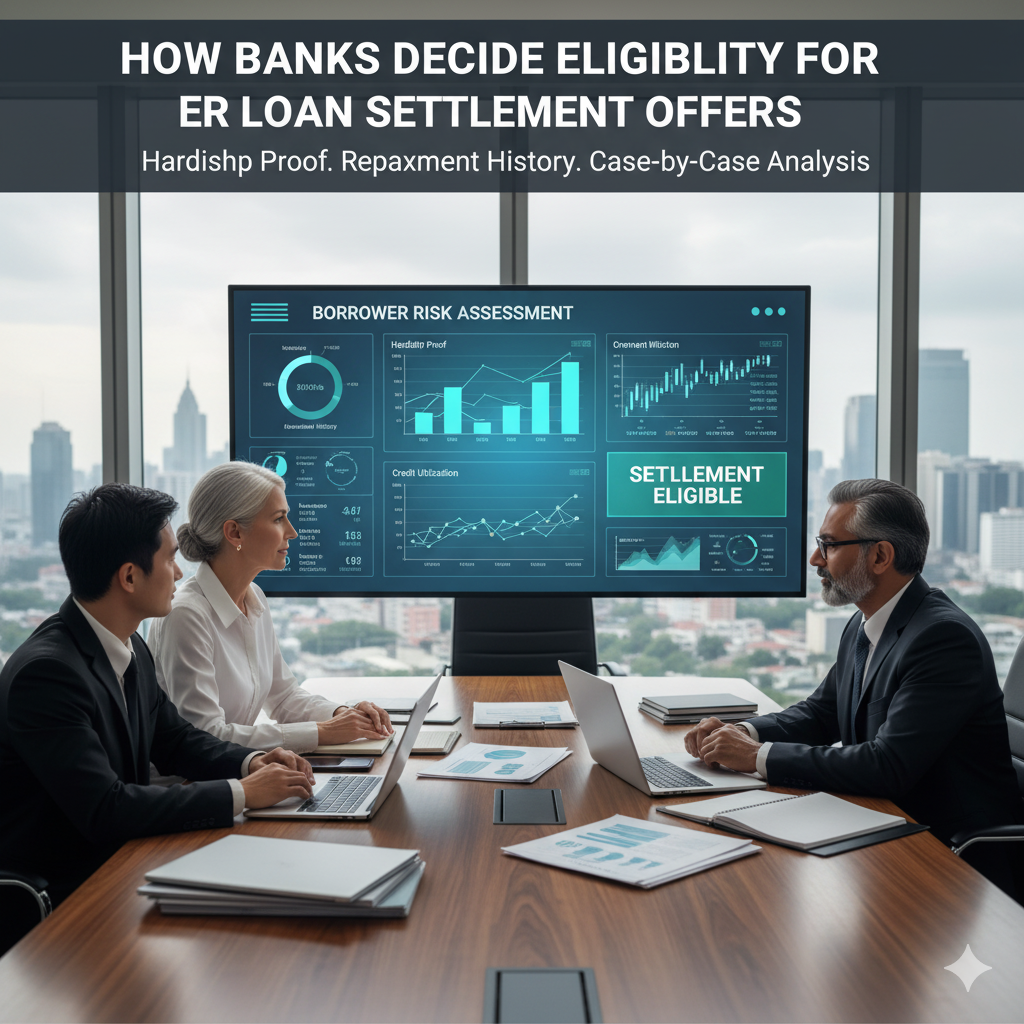
Banks use a specific set of criteria to evaluate your case. The stronger your case is for each of these factors, the more likely the bank is to consider a settlement offer.
- Genuine Financial Hardship: This is the most crucial factor. You must provide verifiable proof that your inability to pay is due to a circumstance beyond your control. This is the evidence that gives a bank a reason to settle.
- Examples of Hardship: Job loss, a major medical emergency, a business failure, or a natural disaster.
- Documents You’ll Need: Termination letters, medical bills, bank statements showing a significant drop in income, or legal documents related to a business closure.
- Duration of Default: A bank will not consider a settlement until a loan has been in default for a significant period, typically 90 days or more. At this point, the loan is often classified as a Non-Performing Asset (NPA), and the bank’s recovery department is authorized to begin considering resolution strategies like a settlement.
- Loan Type: Unsecured loans like personal loans and credit card debt are the most common types of loans that are settled. For secured loans, such as home or car loans, the bank holds the asset as collateral and is more likely to pursue seizure of the asset rather than a settlement.
- Your Repayment History: While you are in default now, a history of timely payments before the default works in your favor. It shows the bank that your current situation is a recent and genuine hardship, not a pattern of irresponsible financial behavior.
How Settlement Ends Harassment for Good
For someone facing constant harassment, understanding these eligibility factors is your first step toward a definitive solution.
A settlement isn’t just a financial agreement; it’s a legal contract. Once you successfully settle your loan and receive a No Dues Certificate (NDC) from the bank, they have no legal right to pursue you for that debt. Any continued harassment from recovery agents is a direct violation of RBI guidelines and can be reported to the Banking Ombudsman or the police.
At Bank Harassment, we understand the bank’s internal processes and can help you build a strong case for a settlement. We’ll assist you in gathering the right documents, negotiating the best possible terms, and, most importantly, ensuring you get the legal paperwork you need to permanently end the harassment and reclaim your peace of mind.