
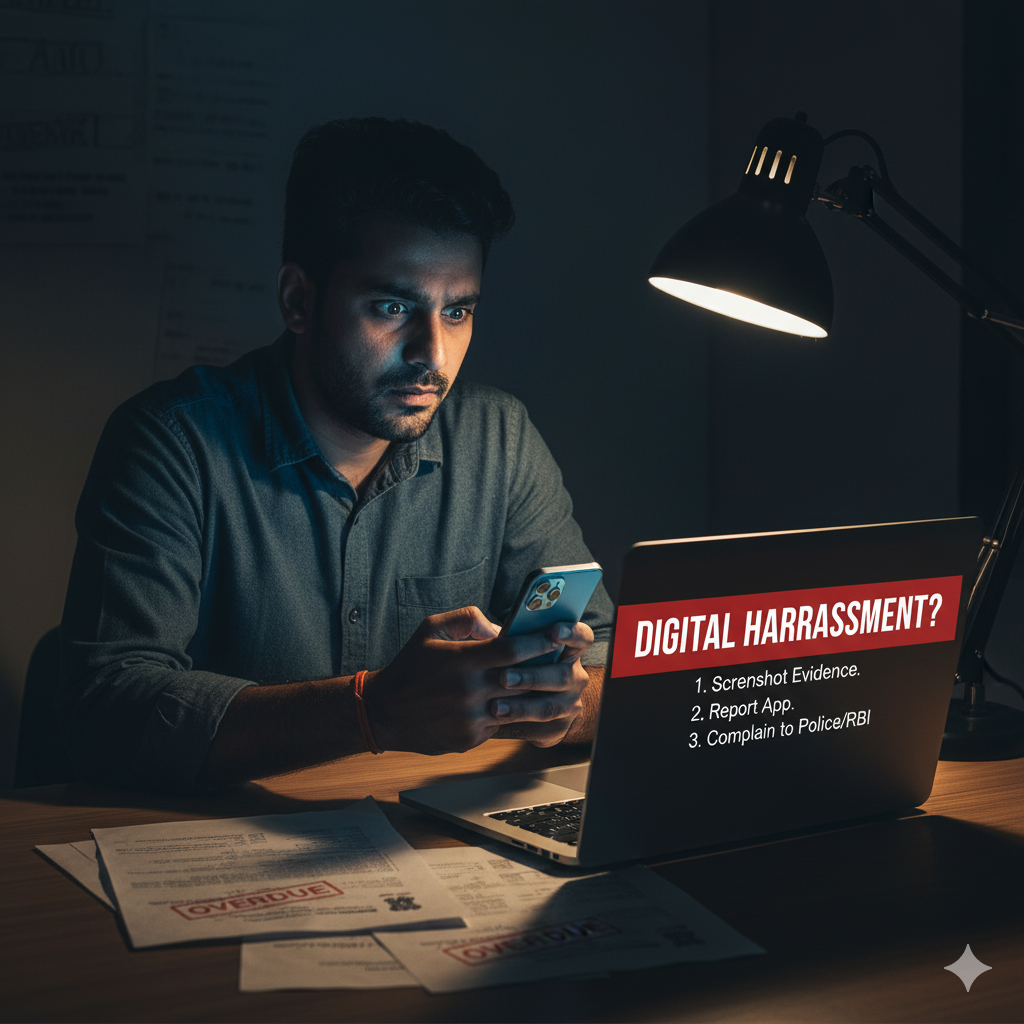
The financial lifeline offered by instant loan apps often comes with a severe hidden cost: brutal digital harassment from recovery agents. Threats, abusive calls, and public shaming are not only terrifying but are also a clear violation of your rights.
If you are suffering through this, the name of our website, Bank Harassment, is a statement of fact: All lending institutions, including the apps they partner with, are held accountable for their agents’ actions. You do not have to tolerate this agent harassment.
Here is a comprehensive guide on how to protect yourself, assert your rights, and move towards a resolution.
1. Prioritize Digital Safety & Documentation
The recovery agent’s goal is to intimidate you into paying, often using the personal data they accessed through the app. Your first defense is rigorous documentation and heightened digital safety.
- Evidence is Power: Every single abusive interaction is a violation.
- Record: Record all phone calls (informing the agent the call is being recorded is best practice).
- Screenshot: Capture all WhatsApp, SMS, or social media messages, ensuring the sender’s number/profile, date, and time are clearly visible.
- Log: Maintain a detailed log of every contact—date, time, duration, and the agent’s specific threat or abuse.
- Contain the Damage: Change your email and banking passwords. Update the privacy settings on your social media profiles. If the app accessed your contact list, inform your friends and family preemptively about the situation and advise them to block calls from unknown numbers.
2. Assert Your Rights Under RBI Guidelines
All regulated entities in India—be it a bank, an NBFC, or the digital app they operate through—must strictly adhere to the Reserve Bank of India’s (RBI) Fair Practices Code. Harassment is explicitly prohibited.
Do not argue with the agent. Simply state, “Your actions violate RBI guidelines on agent conduct. I am recording this call and will be filing a formal complaint against you and your lender.” Then, terminate the communication.
3. The Formal Complaint Escalation Path
The most effective way to stop agent harassment is to make the lender accountable through official channels. Follow this precise three-step escalation path:
Step A: Lodge a Complaint with the Lender (Mandatory)
Your first step is to complain directly to the bank or NBFC that lent the money.
- Target the Grievance Officer: Send a formal email or registered letter to the institution’s designated Grievance Redressal Officer.
- Provide Evidence: Attach your documented proof (call recordings, screenshots, logs).
- The bank/NBFC is legally obliged to respond to your complaint within 30 days.
Step B: Escalate to the RBI Ombudsman
If the lender fails to respond, or their response is unsatisfactory, escalate your complaint under the Reserve Bank – Integrated Ombudsman Scheme (RB-IOS, 2021).
- File your complaint on the RBI’s Complaint Management System (CMS) portal. The Ombudsman can impose penalties on the lender and order compensation for the mental agony caused by the harassment.
Step C: File a Police Complaint (Cyber Crime)
For extreme cases involving threats of violence, defamation, or public shaming, file a First Information Report (FIR) with your local police or the National Cyber Crime Reporting Portal. You can seek protection under sections of the Indian Penal Code (IPC) for criminal intimidation.
4. Move Towards an App Loan Settlement
Endless harassment and legal battles only add to your stress. The most definitive solution is achieving a final app loan settlement.
At Bank Harassment, we work to remove you from the harassment cycle and secure a sustainable debt resolution. We use your evidence of illegal harassment as leverage to negotiate a fair settlement with the lender, often reducing the total amount due.
You deserve to resolve your debt with dignity. If you feel overwhelmed by the constant pressure and threats, our experts are here to help you turn the tide.
Contact Us Today to stop the harassment and explore a clear path to debt freedom.