
A successful Loan Settlement is the decisive battle that ends debt and stops Bank Harassment. You’ve closed a difficult chapter, but the record of that struggle—the “Settled” status—now sits on your credit report (CIBIL, Experian, etc.). This negatively impacts your Credit Score and remains visible for up to seven years.
The journey to a strong financial future starts now. By adopting disciplined habits and a strategic plan, you can not only rebuild your Credit Score but demonstrate to future lenders that you are a responsible borrower.
1. Credit Report Hygiene: The Foundation of Rebuilding
The first step is to ensure your credit history accurately reflects the settlement and to fix any residual damage.
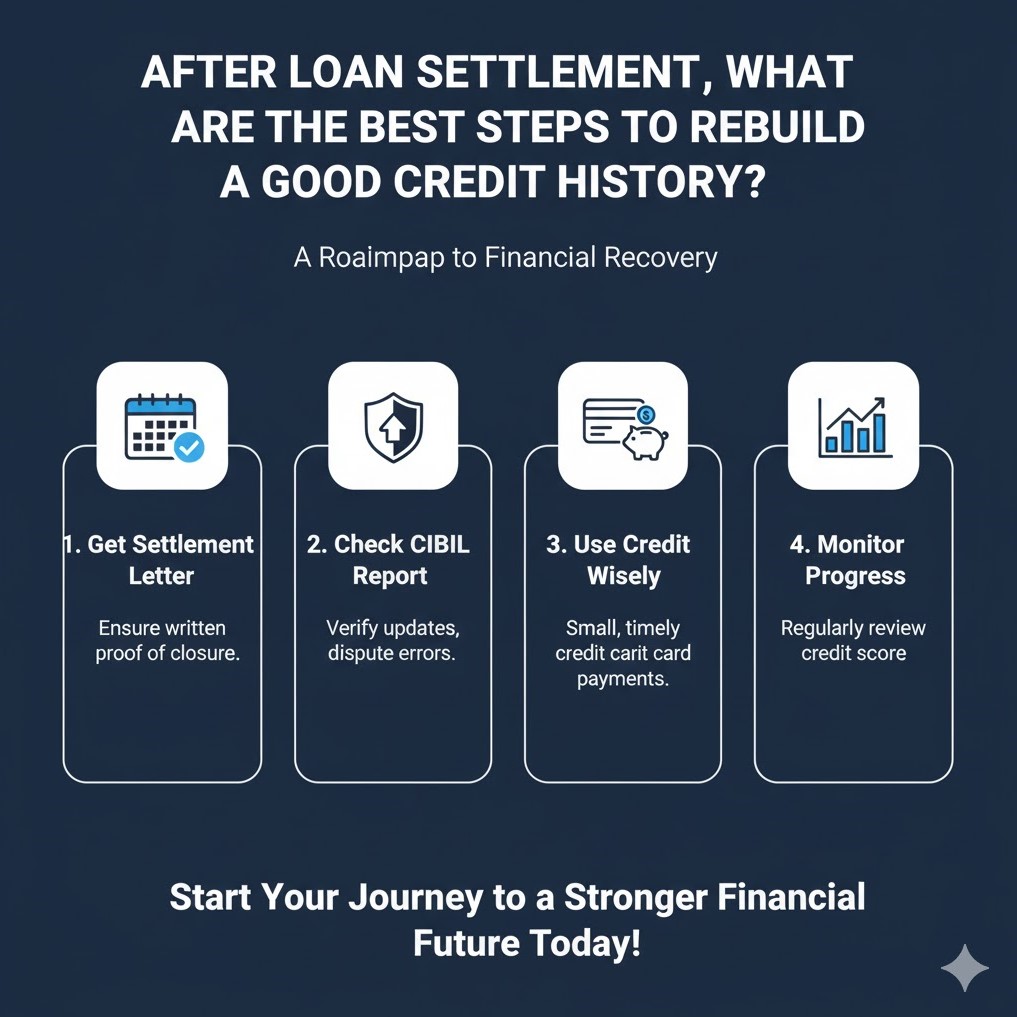
- Secure the Final Proof: After paying the settlement amount, immediately obtain the formal No Objection Certificate (NOC) from the lender. This document is your legal proof of closure.
- Verify the “Settled” Status: Pull your full credit report. Ensure the settled loan shows a ₹0 Outstanding Balance and is correctly marked as “Settled.” Any status like “Written Off” or “Default” (without the “Settled” tag) is worse and must be disputed immediately.
- Dispute Inaccuracies: If you find any mistakes (wrong dates, incorrect amounts, or un-removed past penalties), file a formal dispute with the credit bureau. Correcting these errors is the quickest way to mitigate long-term damage.
2. Master Timely Payments (The Top Scoring Factor)
A perfect payment history is the single most important factor in your Credit Score recovery.
- Flawless Record: Pay all your remaining financial obligations (utilities, rent, any other existing loans, and credit card bills) on or before the due date. Consistency shows stability and trustworthiness.
- Set Autopay: To avoid accidental late marks—which severely penalize your score—set up automatic payments for minimum amounts on all recurring dues.
- Clear All Overdues: If you have any other outstanding debts, prioritize clearing them as quickly as possible. Every debt cleared improves your overall financial standing.
3. Utilize Credit Responsibly (The Rebuilding Tools)
You need to cautiously demonstrate that you can manage credit without defaulting again.
- Secured Credit Card (The Best Tool): Since your score will be low, obtaining a regular credit card may be difficult. Consider applying for a Secured Credit Card (available against a Fixed Deposit). This allows you to use credit and build a positive payment history, as all payments are reported to the credit bureaus.
- Maintain Low Credit Utilization (CU): This is critical. Never use more than 30% of your available credit limit on any card. High utilization (maxing out a card) signals financial distress and actively lowers your score. Aim to keep usage below 20%.
- Avoid New Loans/Enquiries: Do not apply for multiple loans or credit cards in the immediate future. Each application results in a “hard inquiry,” which temporarily lowers your score and signals desperation to lenders.
A Note on Time and Patience
Rebuilding your Credit Score after a Loan Settlement takes patience and discipline. It typically requires 12 to 24 months of consistent, responsible financial behavior to see a significant positive rebound. Stay committed, stick to your budget, and monitor your score regularly.
You fought to stop the Bank Harassment and close the debt. Now, it’s time to build a solid foundation for your future.
Ready to start your strategic credit recovery plan?