
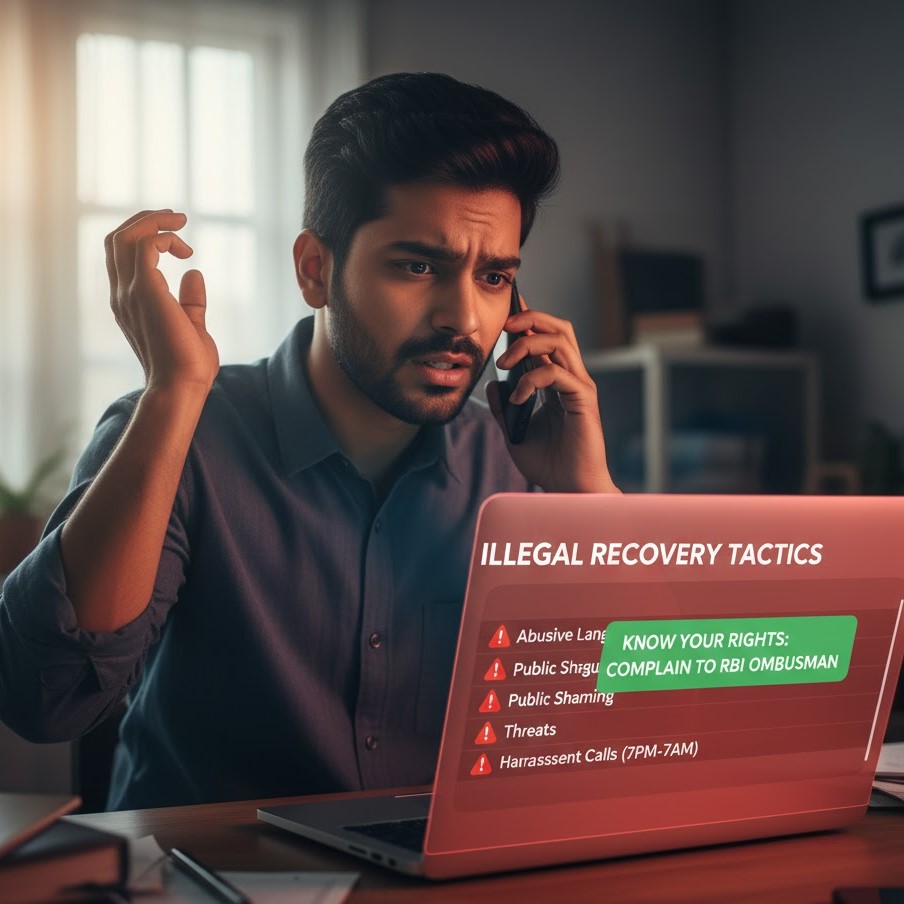
When you default on a loan, the threats, intimidation, and possible public humiliation from recovery agents can be overwhelming. This fear often leads borrowers to ask the critical question: Is this legal? Does the bank have the right to shame or threaten me?
The answer is an absolute, powerful NO.
The Reserve Bank of India (RBI) and Indian legal statutes have repeatedly and unequivocally prohibited the use of intimidation, threats, or public shaming by banks and their recovery agents. These actions are not merely unethical; they are illegal, a violation of your fundamental rights, and a punishable offense.
1. Public Shaming is a Violation of Human Dignity
The RBI’s Fair Practices Code and various court judgments have established that a borrower’s debt status is a private matter. Any attempt by a recovery agent to expose your debt is a violation of your right to dignity and privacy guaranteed under Article 21 of the Constitution of India.
What Banks/Agents Are Forbidden From Doing:
- Involving Third Parties: Disclosing your loan details to neighbors, colleagues, friends, or unrelated family members is a direct violation of privacy and constitutes Bank Harassment.
- Workplace Visits: Showing up at your place of work to shame you or create a scene is strictly prohibited and a reportable offense.
- Public Display: Posting your name, photo, or loan amount in public forums, social media, or outside your home to humiliate you is illegal.
RBI Mandate: Banks and their agents must not resort to intimidation or harassment of any kind, including publicly humiliating the borrower or invading their privacy.
2. Threats and Coercion Are Criminal Offences
Recovery agents often use threats of arrest or property seizure to induce fear. These are almost always illegal bluff tactics.
- False Legal Threats: Agents have no authority to order your arrest, send you to jail, or instantly seize your property (especially in unsecured loans). Real legal action requires proper court notice and formal procedures handled by the bank’s legal department.
- Restricted Contact Hours: Agents are strictly forbidden from calling or visiting you before 7:00 AM and after 7:00 PM. Contact outside this window is a reportable violation of RBI rules and constitutes Agent Harassment.
- Verbal Abuse: Any use of abusive language, shouting, or physical threats is illegal and can be grounds for criminal charges under the Indian Penal Code (IPC), specifically Section 506 (Criminal Intimidation).
3. Your Step-by-Step Action Plan to Stop Harassment
You have the law and the regulator on your side. Use this plan to stop the harassment and force professional engagement:
| Step | Action to Take | Outcome/Purpose |
| 1. Document | Keep a log of every incident (Date, Time, Agent Name/Phone, Exact Abuse/Threat). | Builds undeniable evidence to support a formal complaint. |
| 2. Complain to Bank | Immediately send a formal email or registered letter to the bank’s Grievance Redressal Officer (GRO). | Forces the bank to address the illegal conduct internally, often leading to agents being called off. |
| 3. Escalate to RBI | If the bank fails to respond within 30 days, or the harassment continues, file a complaint with the RBI Integrated Ombudsman Scheme. | The RBI takes action against the bank (fines, penalties) for guideline violations. |
| 4. Police Action (Extreme) | File a First Information Report (FIR) at your local police station if you face physical threats, criminal intimidation, or trespassing. | Initiates criminal proceedings against the agent under the Indian Penal Code. |
By actively challenging illegal Bank Harassment, you force the lender to abandon unethical tactics and open the door for a legal resolution, such as a negotiated Settle Loan agreement. You don’t lose your rights when you fall into debt.