
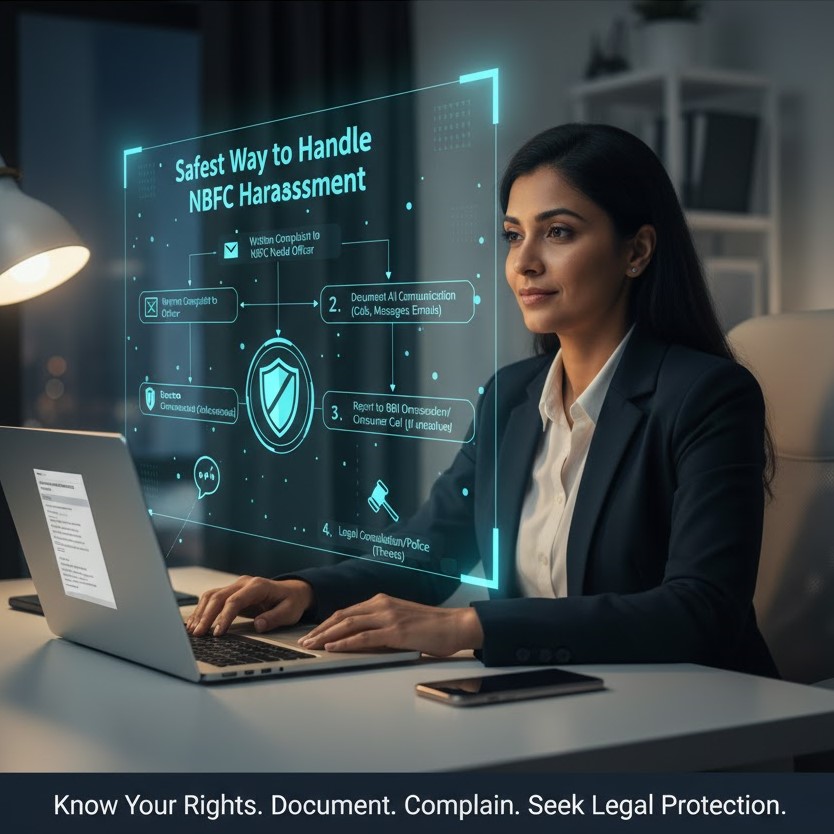
Facing financial difficulty is stressful enough without the added burden of harassment from loan recovery agents. If you’ve taken a loan from a Non-Banking Financial Company (NBFC) and are now experiencing aggressive or unethical collection tactics, you need to know your rights and the safest steps to take.
Remember, being in debt is not a crime, but harassment certainly is. The Reserve Bank of India (RBI) has laid down strict guidelines to protect borrowers. Knowledge is your first line of defense.
1. Know Your Rights (The RBI Shield)
The safest way to handle Agent Harassment is to hold the NBFC and its agents accountable to the law. The RBI’s Fair Practices Code mandates respectful and non-coercive recovery practices.
| Your Right | What Recovery Agents Cannot Do |
| Right to Privacy | Contact you between 7 PM and 7 AM. |
| Right to Dignity | Use abusive, threatening, or vulgar language. |
| Right to Confidentiality | Publicly humiliate you or discuss your debt with your employer, friends, or neighbors without consent. |
| Right to Verification | Refuse to show their ID card and authorization letter from the NBFC/Bank. |
| Right to a Fair Process | Engage in physical intimidation or illegal trespassing. |
2. Document Everything—Your Evidence Kit
To successfully combat Bank Harassment, you must maintain a clear, unassailable record of every incident.
- Record All Calls: Use a call-recording feature on your phone for all interactions with the recovery agent.
- Log Incidents: Immediately note the date, time, agent’s name (if given), agency name, and the exact nature of the harassment (e.g., abusive language, threat, timing violation).
- Save All Communication: Preserve SMS, WhatsApp chats, and emails. Take screenshots.
- Witnesses: Note down the details of any person present during an in-person harassment incident.
3. File a Formal Complaint (The Escalation Ladder)
Do not let the harassment go unreported. Follow this structured escalation process to ensure your complaint is taken seriously.
Step 1: Complain to the NBFC/Bank
The NBFC is ultimately responsible for the conduct of its agents.
- Write a formal, detailed complaint to the NBFC’s Grievance Redressal Officer (GRO). Include all your evidence (incident log, recordings, etc.).
- Send the complaint via email and registered post to have a record of submission.
- The NBFC is mandated to respond and resolve the issue within a stipulated time (usually 30 days).
Step 2: Escalate to the RBI Ombudsman
If the NBFC fails to respond within 30 days or provides an unsatisfactory resolution, escalate the issue to the Reserve Bank of India.
- File a complaint under the RBI Integrated Ombudsman Scheme via the CMS portal (Complaint Management System).
- Attach your initial complaint and any response (or lack thereof) from the NBFC. The Ombudsman is an independent authority that can enforce action against the NBFC and even award compensation for mental agony.
Step 3: File a Police Complaint (FIR)
If the harassment involves physical threat, criminal intimidation, stalking, or invasion of privacy, you must immediately file a First Information Report (FIR) at your local police station. Provide your complete evidence kit to the police.
Need an Anti-Harassment Service?
If the process of managing agents and filing complaints seems overwhelming, you can opt for an Anti-Harassment Service that provides expert guidance and intervention. These services can:
- Intervene directly with recovery agents to stop illegal collection practices.
- Guide you through the legal and regulatory complaint process.
- Help you negotiate a fair loan repayment solution.
Contact Us
Don’t face Bank Harassment alone. If you need professional advice, guidance on filing a complaint with the RBI Ombudsman, or support in dealing with aggressive recovery agents, reach out to our experts.